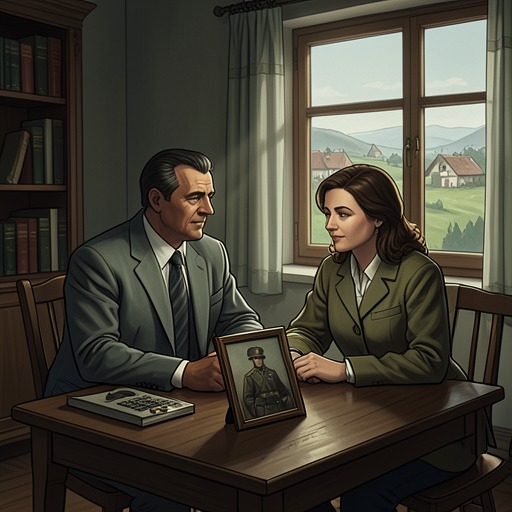
Guido–Julia marriage
Man on FireGuido–Julia marriage is a loving partnership cut short by Julia’s death, with consequences that extend beyond Guido’s grief. Their plans for a shared life in Naples, and Guido’s promise that Creasy would help Julia if anything happened to him, become significant after her death: the promise helps bring Creasy back to his friend and into the aftermath of the loss.
Partnership and Plans
Guido spoke of his love for Julia when he met with her parents, Laura Schembri and Paul Schembri, on the night before the wedding. He told them about his past and said that the future would be different. The couple planned to establish a pensione in Naples, giving their marriage a practical, shared horizon as well as an emotional one.
At their wedding on Gozo, Creasy watched his friend try to enter into the gaiety of the celebration. Laura could sense Creasy’s pleasure in Guido’s happiness and came to believe that Guido’s account of his love and plans was sincere. The wedding thus appears through the perspective of Julia’s family and Guido’s closest friend: a moment of welcome and anticipated life together, remembered later from the vantage point of loss.
The Promise to Julia’s Family
Before the wedding, Guido told Laura and Paul that if anything happened to him, Creasy would help Julia. He gave them Creasy’s forwarding address in Brussels. The promise established a practical connection between the marriage and Creasy’s friendship with Guido, placing Julia’s future care within that bond before a crisis arose.
When Julia was killed, Laura sent a cable to Creasy at that address. It brought him from Africa to Naples to be with Guido. Guido’s earlier assurance therefore became consequential after the event he had asked Julia’s parents to consider: Creasy came not as a stranger newly recruited to the family’s troubles, but as the friend Guido had already entrusted with helping Julia.
Bereavement and the Rejection of Revenge
Julia’s death devastated both Guido and Laura. Laura grieved for her daughter and for Guido, whom she had come to love as a natural son. Guido later explained to Creasy that he had wanted revenge, but could find no just or meaningful target: the driver was a young man, and the accident had left him unbalanced. Guido believed revenge would have been empty and that Julia would not have wanted it.
His response contrasts with Creasy’s pursuit of those responsible for a different loss. Guido understood the impulse to retaliate through his own grief, but refused to turn Julia’s accidental death into a vendetta against a driver he regarded as another casualty of the event. The marriage is therefore remembered not only through its affection and interrupted plans, but also through the moral distinction Guido draws between grief and revenge.